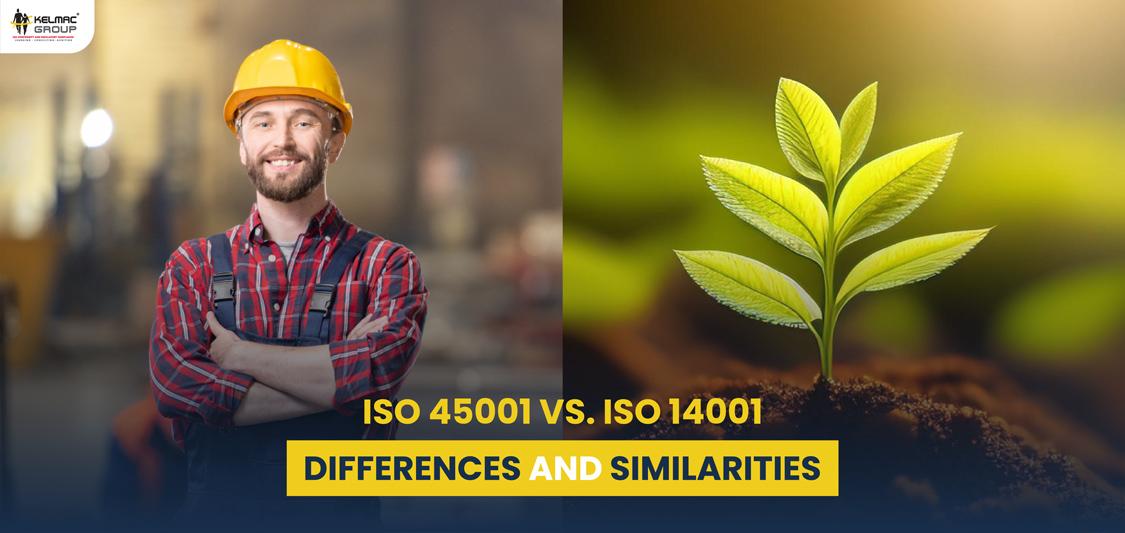
In the world of international standards, ISO 45001 and ISO 14001 are two prominent names that often appear when discussing occupational health and safety (OHS) and environmental management. These standards, developed by the International Organisation for Standardisation (ISO), play crucial roles in helping organisations across the globe ensure the well-being of their employees and minimise their environmental impact. In this article, we will explore the key differences and similarities between ISO 45001 and ISO 14001, shedding light on their respective purposes, scopes, and areas of overlap.
Understanding ISO Standards
ISO 45001 is an internationally recognised standard that focuses on occupational health and safety management. Its primary objective is to provide a framework that helps organisations create a safe and healthy work environment for their employees while preventing workplace accidents and illnesses. ISO 45001 sets out guidelines for identifying, controlling, and mitigating OHS risks.
Explore Our Courses:
- ISO 45001 Lead Auditor Training Course
- ISO 45001 Training Courses
- ISO 45001 Fundamental Training Course
What is ISO 14001?
ISO 14001, on the other hand, is a standard that revolves around environmental management. It is designed to assist organisations in minimising their environmental footprint, ensuring sustainability, and complying with relevant environmental laws and regulations. ISO 14001 emphasises the need for continuous improvement in environmental performance.
Explore Our Courses:
- ISO 14001-2015 Lead Auditor Training Course
- ISO 14001 Internal Auditor Training
- ISO 14001-2015 Fundamental Training Course
ISO 45001 vs. ISO 14001: Purpose and Scope
ISO 45001: Occupational Health and Safety
ISO 45001 primarily targets the well-being of employees within an organisation. It aims to reduce workplace accidents, occupational diseases, and fatalities. The scope of ISO 45001 is to create a culture of safety and health at work and prevent potential hazards that could harm employees.
ISO 14001: Environmental Management
ISO 14001, conversely, is all about protecting the environment. It addresses issues such as pollution, waste management, and resource conservation. The primary scope of ISO 14001 is to help organisations adopt environmentally responsible practices, minimise their impact on nature, and meet their legal obligations.
ISO 45001 vs. ISO 14001: Key Differences
The major differences between ISO 45001 and ISO 14001 are:
Focus and Objectives
ISO 45001 is more focused on human well-being and workplace safety, while ISO 14001 places its emphasis on ecological sustainability and environmental protection. These varying foci lead to different objectives for the two standards.
Compliance and Legal Requirements
Organisations implementing ISO 45001 need to ensure compliance with health and safety laws and regulations. Conversely, ISO 14001 compliance centres around adherence to environmental laws and regulations.
Stakeholder Involvement
ISO 45001 promotes employee participation and consultation in OHS matters. ISO 14001, however, encourages organisations to engage with stakeholders and consider their concerns when making environmental decisions.
ISO 45001 vs. ISO 14001: Similarities
Despite their distinct goals, ISO 45001 and ISO 14001 do share some common ground:
Risk Assessment
Both standards require organisations to identify and assess risks. ISO 45001 focuses on risks to employee health and safety, while ISO 14001 addresses environmental risks.
Continuous Improvement
Both standards advocate a culture of continuous improvement. ISO 45001 promotes ongoing safety enhancements, while ISO 14001 encourages organisations to find ways to reduce their environmental impact continually.
FAQs
Q: What are the key differences between ISO 45001 and ISO 14001?
A: The main difference is their focus. ISO 45001 is centred on occupational health and safety, ensuring the well-being of employees. ISO 14001, on the other hand, is primarily concerned with environmental management and sustainability practices. While both share the same management system framework, their objectives and areas of emphasis differ.
Q: Can an organisation be certified for both ISO 45001 and ISO 14001?
A: Yes, an organisation can seek certification for both ISO 45001 and ISO 14001. Many organisations choose to implement integrated management systems to address both occupational health and safety as well as environmental concerns. This can lead to increased efficiency and reduced duplication of efforts.
Q: Are there any similarities between ISO 45001 and ISO 14001?
A: Both standards share a common structure and follow the Plan-Do-Check-Act (PDCA) cycle for continuous improvement. This similarity makes it easier for organisations to integrate their management systems and improve overall performance in occupational health, safety, and environmental areas.
Q: Which standard should my organisation prioritise if resources are limited?
A: The choice depends on your organisation's specific goals and challenges. If workplace safety is a top priority, prioritise ISO 45001. If environmental responsibility is critical, opt for ISO 14001. Many organisations, however, choose to pursue both standards gradually.
Q: Do ISO 45001 and ISO 14001 require ongoing compliance?
A: Yes, both standards require ongoing compliance. Organisations must continuously monitor and improve their health and safety or environmental management systems to maintain certification.
