
In the ever-evolving landscape of business, ensuring the highest level of quality management is highly imperative. ISO 9001, a globally recognised standard for quality management systems, plays a pivotal role in achieving this goal. One of the key components of ISO 9001 compliance is conducting internal audits.
In this comprehensive guide, we will delve into the Five Main Steps in ISO 9001 Internal Audit, shedding light on the process, its significance, and how it contributes to organisational excellence.
Introduction to ISO 9001 Internal Audit
Let's begin our journey by understanding what ISO 9001 internal audit is all about. ISO 9001 is an internationally recognised quality management system that helps organisations consistently meet customer needs and enhance satisfaction. An internal audit, in this context, is a systematic review process to ensure that your organisation is following the ISO 9001 standard effectively.
Five Main Steps in ISO 9001 Internal Audit
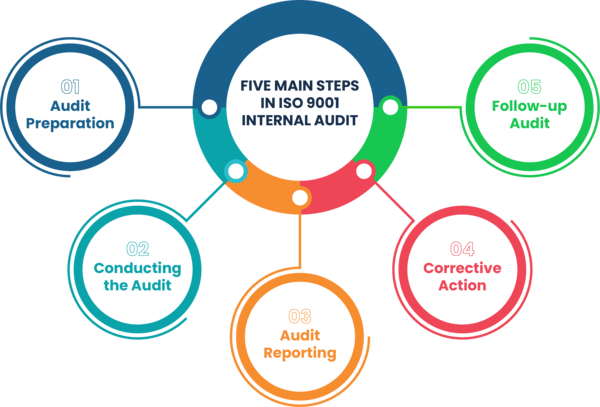
The ISO 9001 Internal Audit mainly involves five main steps that are discussed below.
Step 1: Audit Preparation
Before you embark on the audit journey, thorough preparation is key. This step involves:
Selecting the Audit Team: Choose competent individuals who are well-versed in ISO 9001 requirements.
Defining the Scope: Determine which areas and processes will be audited.
Developing an Audit Plan: Create a detailed plan outlining the audit objectives, scope, and methodology.
Step 2: Conducting the Audit
Now, it's time to put on your detective hat and dive into the actual audit process. During this step:
Gather Evidence: Collect data and evidence through interviews, document reviews, and observations.
Assess Compliance: Compare your findings with ISO 9001 requirements and identify non-conformities.
Maintain Objectivity: Ensure impartiality and independence throughout the audit.
Step 3: Audit Reporting
After the audit, it's crucial to communicate your findings effectively. This phase involves:
Documenting the Results: Create a comprehensive report detailing your audit findings.
Identifying Non-Conformities: Highlight areas where the organisation falls short of ISO 9001 standards.
Providing Recommendations: Suggest corrective actions to address non-conformities.
Explore Our ISO 9001 Courses:
Step 4: Corrective Action
This step is all about taking action to rectify identified issues:
Develop an Action Plan: Create a plan outlining how non-conformities will be addressed.
Implement Corrective Actions: Put the plan into action and monitor progress.
Verify Effectiveness: Ensure that corrective actions have resolved the issues.
Step 5: Follow-up Audit
The journey doesn't end with corrective action; you need to ensure long-term compliance:
Schedule Follow-up Audits: Regularly assess whether the corrective actions are effective.
Review Progress: Verify that non-conformities have been addressed satisfactorily.
Continuous Improvement: Use audit findings to drive continuous improvement in your organisation.
Conclusion
The Five Main Steps in ISO 9001 Internal Audit are a cornerstone of achieving quality management excellence. By following these steps diligently, organisations can not only comply with ISO 9001 standards but also continuously improve their processes, products, and services. Internal audits are not just a requirement; they are a pathway to excellence, ensuring that your organisation remains at the forefront of quality management.
Related Articles:
FAQs
Q: How often should internal audits be conducted?
A: The frequency of internal audits depends on the organisation's size and complexity. However, it's recommended to conduct audits at least annually to ensure ongoing compliance with ISO 9001 standards.
Q: Who should be part of the ISO internal 9001 audit team?
A: The audit team should consist of individuals with a deep understanding of the organisation's processes and ISO 9001 requirements. It may include internal staff or external auditors with relevant expertise.
Q: What happens if non-conformities are identified during the audit?
A: Non-conformities are opportunities for improvement. When they are identified, corrective actions should be taken promptly to address the issues and bring the quality management system into compliance.
Q: How long does it take to complete an ISO 9001 internal audit?
A: The duration of an internal audit varies based on the organisation's size and complexity. It can range from a few days to several weeks, with planning and reporting phases contributing to the timeline.
Q: What are the benefits of ISO 9001 internal audits?
A: ISO 9001 internal audits help organisations identify areas for improvement, enhance product and service quality, reduce risks, and increase customer satisfaction. They also ensure ongoing compliance with ISO standards.
