
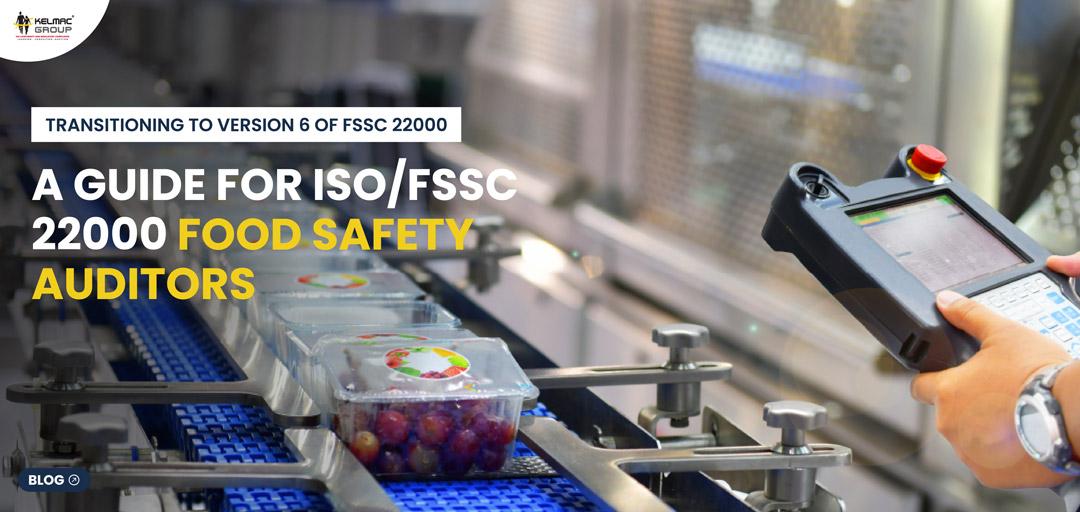
As ISO Food Safety Auditors, staying up-to-date with the latest industry standards is crucial to ensuring the highest level of food safety. In this blog, we will discuss the transition from version 5.1 to version 6 of FSSC 22000, emphasizing the importance of this update and providing guidance on how auditors can make a smooth transition. With the introduction of new requirements and a stronger focus on risk-based thinking, this transition will further enhance food safety practices and maintain the reputation of auditors and their organizations.
Understanding the Importance of Transition
The release of version 6 of FSSC 22000 brings several significant changes that reflect the evolving landscape of food safety management systems. Adapting to these changes is vital for auditors as it enables them to remain at the forefront of food safety assurance and meet the increasing expectations of stakeholders. The revised standard reinforces the importance of proactive risk management, continuous improvement, and integration with ISO/TS 22003-1:2022. By embracing these changes, auditors can further enhance their ability to assess and verify the effectiveness of food safety measures implemented by organizations.
Key Changes in Version 6:
- Expanded Scope: Version 6 of FSSC 22000 now includes requirements for food packaging manufacturers, catering companies, transport and storage, and other organizations involved in the food supply chain. This expansion presents auditors with new challenges and opportunities to broaden their expertise.
- Enhanced Risk Management: The updated standard places greater emphasis on risk-based thinking and aligns with the high-level structure of ISO 9001. Auditors need to develop a thorough understanding of risk assessment methodologies and assist organizations in identifying, evaluating, and mitigating food safety risks, see the Kelmac Group® Academy Risk Management courses.
- Food Fraud Prevention: Version 6 introduces a dedicated section on food fraud prevention, emphasizing the importance of safeguarding against intentional adulteration and fraudulent activities. Auditors must familiarize themselves with food fraud mitigation strategies and assist organizations in implementing appropriate control measures.
- Updated Requirements for Food Defense: In response to emerging threats and vulnerabilities, the new standard incorporates updated requirements for food defense. Auditors need to help organizations assess their vulnerabilities, develop robust defense plans, and monitor their effectiveness.
Food Safety and Quality Culture
In order to pay more attention to the topic in the new version, a completely new chapter has been included in the additional requirements.
It now covers a quality culture in addition to the well-known aspects from the Codex Alimentarius and Regulation (EU) 2021/382 of 03.03.2021. As part of the organization's commitment to cultivating a positive food safety and quality culture, senior management shall establish, implement and maintain food safety and quality culture objectives. Aspects to consider in food safety and quality culture are communication, training/initial training, employee feedback and engagement, and performance measurement.
It explicitly requires a documented food safety and quality culture plan with targets and deadlines showing continuous improvement and the evaluation in the management review
Making a Smooth Transition: To ensure a smooth transition to version 6 of FSSC 22000, ISO Food Safety Auditors can follow these key steps:
- Familiarize Yourself with the Changes: Thoroughly review the updated standard, paying special attention to the new requirements and changes in existing clauses FSSC 22000 V6.0 Fundamentals training courses help to enhance your understanding of the revised standard.
- Update Audit Skills: Enhance your audit skills that specifically focus on auditing against version 6 of FSSC 22000, such as the FSSC 22000 Internal Auditor, FSSC 22000 Lead Auditor, or Advanced Lead Auditor courses. This will enable you to effectively assess organizations' compliance with the new requirements and provide valuable feedback for improvement.
- Collaborate with Organizations: Engage in open and collaborative communication with the organizations you audit. Educate them about the changes in version 6 and assist them in updating their food safety management systems accordingly. Share best practices and provide guidance to ensure a successful transition.
Stay Informed
Continuously update your knowledge by staying connected with industry experts, attending conferences, and participating in forums and discussions. This will keep you well-informed about emerging trends, challenges, and best practices related to food safety via the Kelmac Group® technical insights newsletter and webinars.
The transition to version 6 of FSSC 22000 presents ISO Food Safety Auditors with an opportunity to further strengthen their expertise and contribute to the continual improvement of food safety practices. By understanding the importance of this transition and actively embracing the changes, auditors can ensure that they remain at the forefront of the industry.