Detecting…
LoginSystem and Organisation Controls (SOC) reports are independent assurance reports designed to evaluate how effectively an organisation manages risk, security, availability, and internal controls. Developed by the American Institute of Certified Public Accountants (AICPA), SOC reports have become a global benchmark for trust and assurance, particularly for service providers handling sensitive data or critical business processes.
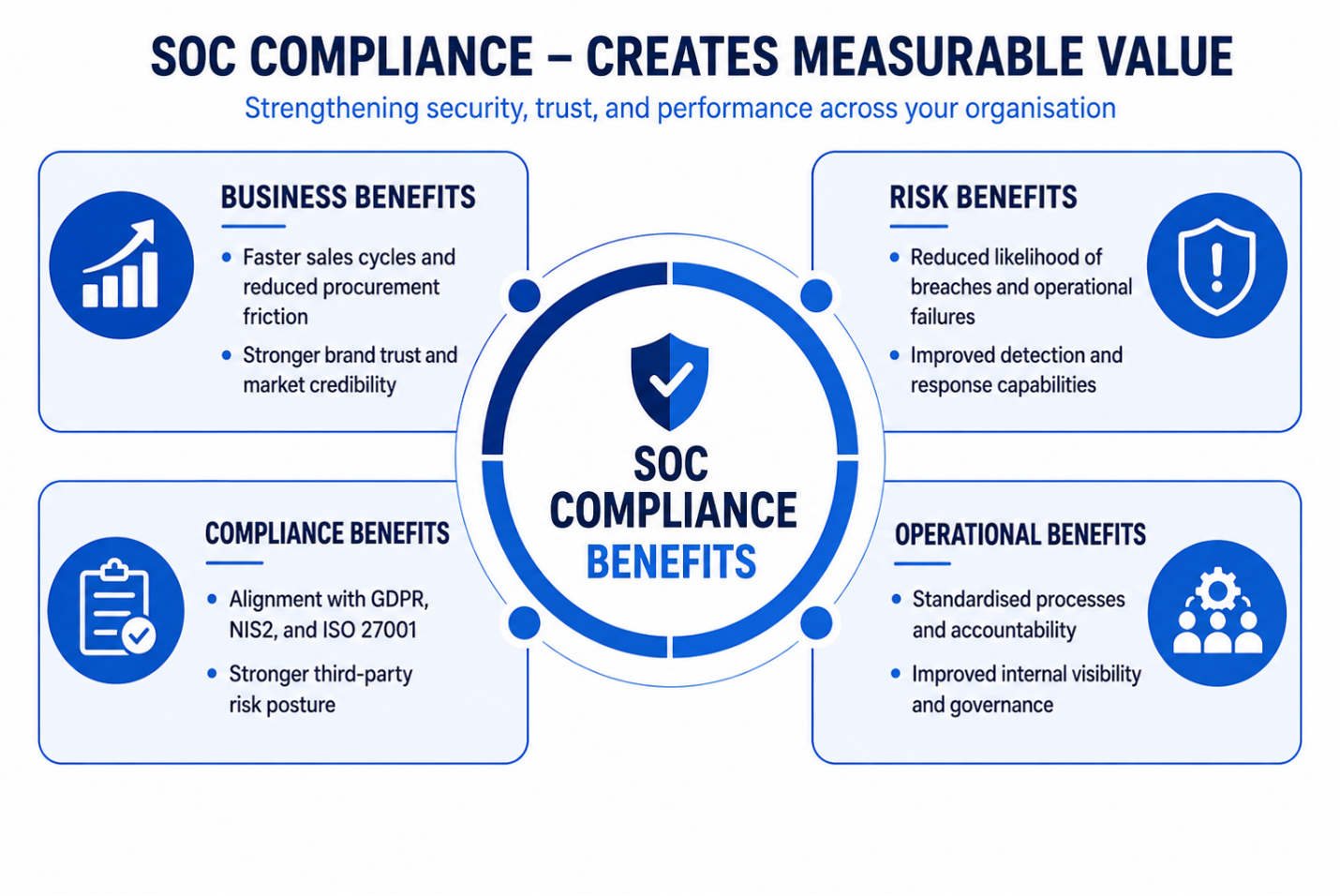
SOC reporting has evolved from a “nice-to-have” to a commercial necessity:
· Enterprise clients increasingly require SOC 2 before signing contracts
· Procurement teams use SOC reports to assess third-party risk
· Investors and regulators expect demonstrable governance maturity
· It accelerates market entry into regulated sectors
Without SOC compliance, organisations often face delayed sales cycles, lost deals, and increased scrutiny.
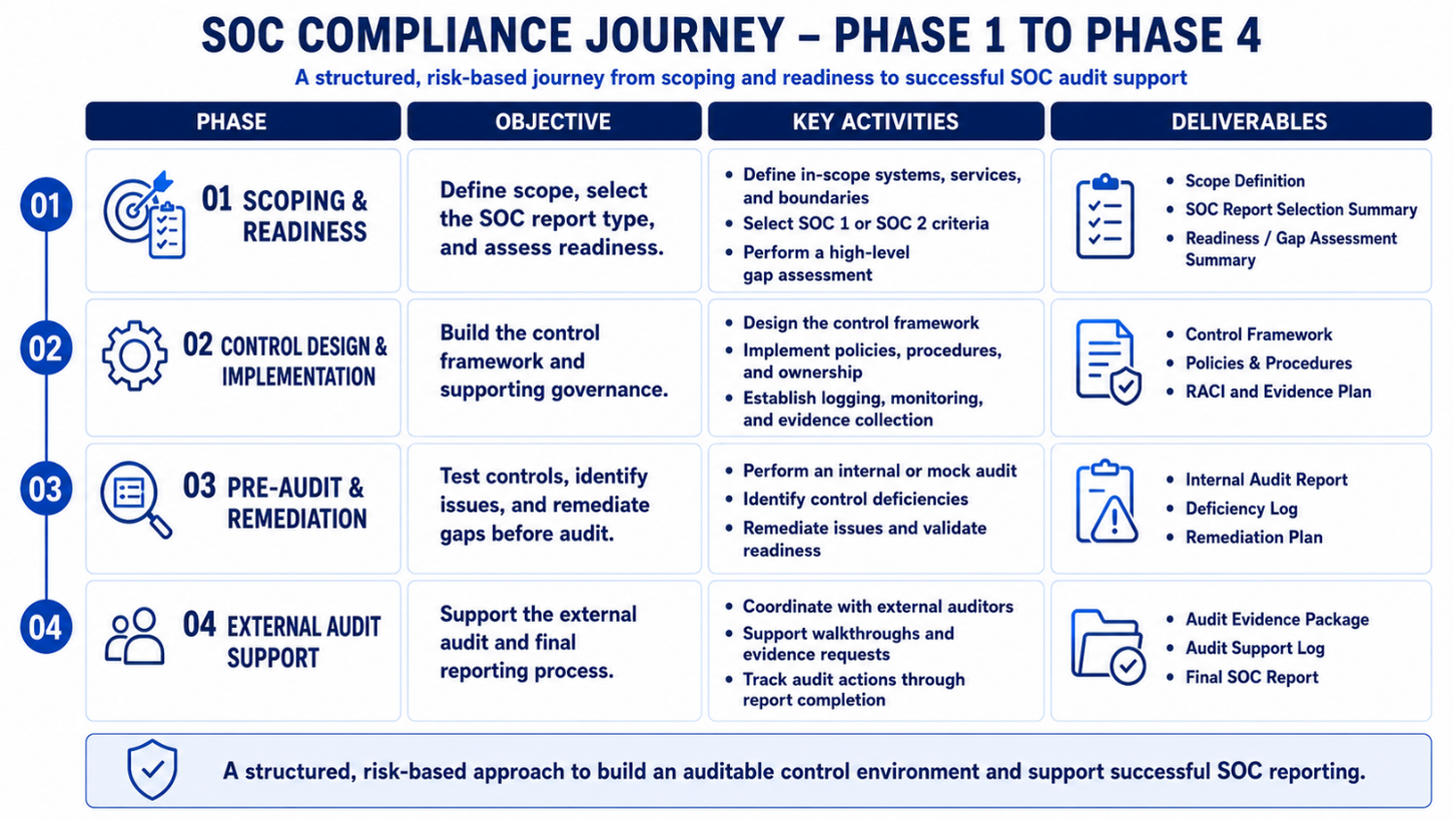
Kelmac applies a pragmatic, audit-focused methodology designed to minimise disruption while accelerating readiness.
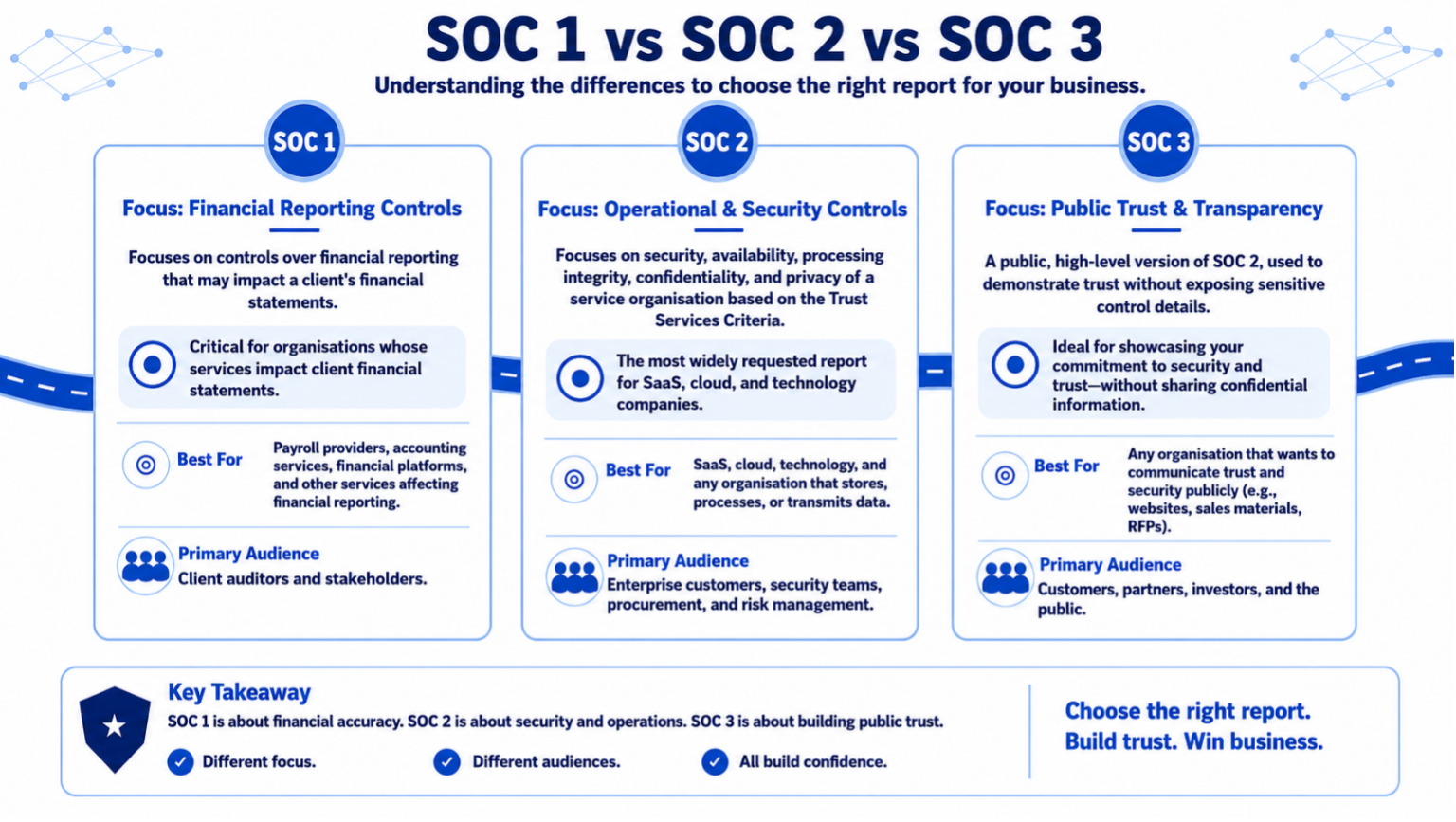
SOC 1 focuses on financial reporting controls, while SOC 2 focuses on security, availability, and data protection.
SOC 3 is a public-facing report used to demonstrate trust without exposing sensitive details.
Typically, 3-6 months for readiness and Type 1. Type 2 requires an additional monitoring period of 6–12 months.
It depends on your services. Financial service providers may need SOC 1, while SaaS and tech companies typically require SOC 2.
It includes assessment of policies, controls, systems, and evidence demonstrates that controls are effectively implemented.
No, but ISO 27001 alignment can support NIS2 compliance. A maturity assessment helps identify how your current controls align with both.
Organisations should begin assessing their readiness immediately, as regulatory expectations and supervisory activities are increasing across the EU.