
Detecting…
LoginThe NIST Cybersecurity Framework is a globally recognised standard for managing and reducing cybersecurity risk. It provides a structured approach to identifying, protecting, detecting, responding to, and recovering from cyber threats. Developed by the National Institute of Standards and Technology, the framework is widely adopted across industries, including financial services, healthcare, and critical infrastructure.
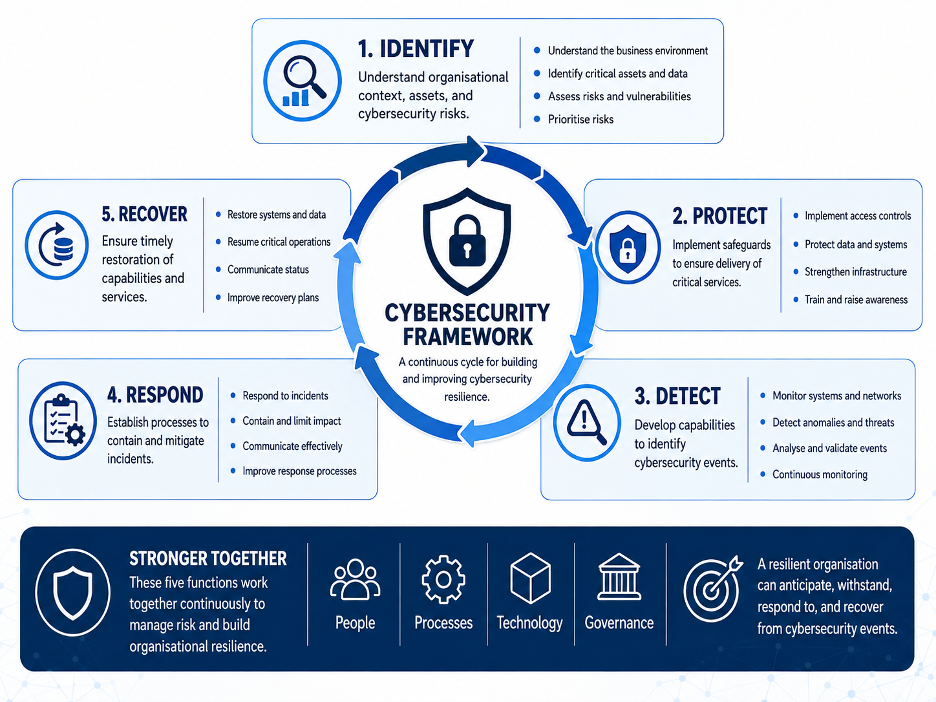
The NIST CSF is built around five core functions:
· Identify: Understand organisational context, assets, and cybersecurity risks.
· Protect: Implement safeguards to ensure delivery of critical services.
· Detect: Develop capabilities to identify cybersecurity events.
· Respond: Establish processes to contain and mitigate incidents.
· Recover: Ensure timely restoration of capabilities and services.
These functions enable organisations to build a comprehensive and scalable cybersecurity programme.
· Structured Risk Management
· Adopt a proven framework to manage cyber risk systematically.
· Improved Governance
· Align cybersecurity with business objectives and risk appetite.
· Regulatory Alignment
· Support compliance with regulations such as GDPR, NIS2, and DORA.
· Enhanced Resilience
· Strengthen your ability to prevent and respond to cyber incidents.
· Stakeholder Confidence
· Demonstrate a mature and recognised approach to cybersecurity.
· Holistic Cyber Risk Management
· Address risks across people, processes, and technology.
· Scalable Framework
· Adaptable for organisations of all sizes and sectors.
· Improved Incident Response
· Enhance readiness and response capabilities.
· Integration with Other Standards
· Align with ISO 27001, CIS Controls, and regulatory frameworks.
· Better Decision-Making
· Provide leadership with clear visibility into cyber risk.
No, but it is widely adopted as best practice and often expected by regulators and partners.
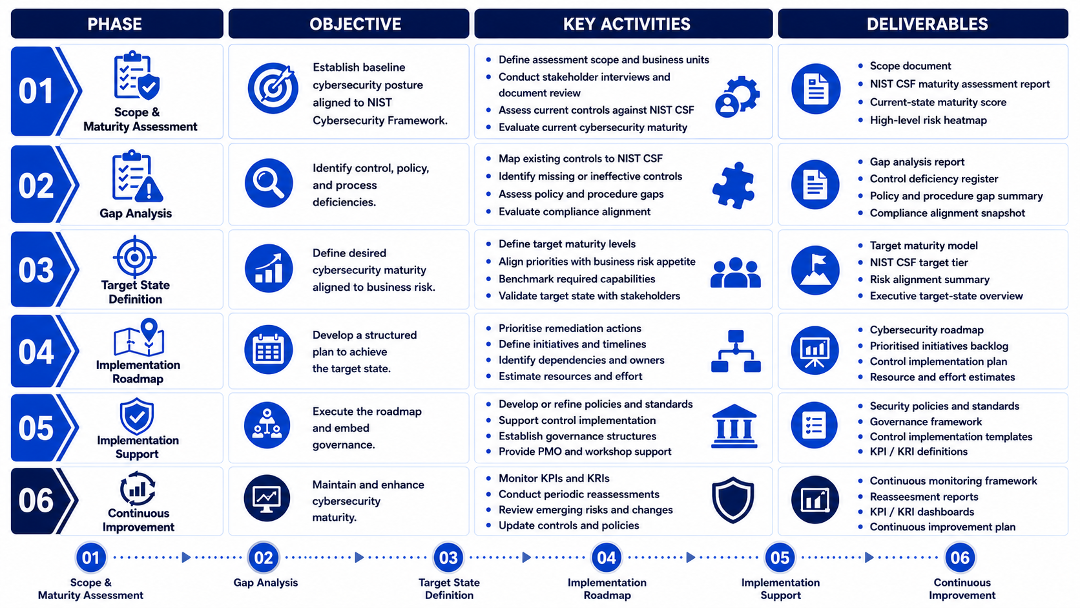
Typically,3–9 months depending on organisational complexity and maturity.
Yes, both frameworks are complementary and can be integrated.
Yes, it is globally recognised and supports compliance with EU regulations.
Yes, we offer continuous advisory and maturity improvement services.