
Detecting…
LoginKelmac Group’s DPO as a Service provides organisations with access to an experienced, independent Data Protection Officer without the cost and complexity of recruiting a full-time internal resource. Our outsourced DPO service helps organisations meet their obligations under the General Data Protection Regulation, strengthen privacy governance and manage data protection risks through ongoing, practical and commercially focused support. The service can be tailored for organisations that are legally required to appoint a DPO, as well as businesses that choose to appoint one voluntarily to improve accountability, customer confidence and regulatory readiness.
DPO as a Service, also known as DPOaaS or an outsourced Data Protection Officer service, enables an external privacy professional to perform the statutory and advisory functions of a DPO under a service contract. The external DPO works with senior management, legal, compliance, information security, human resources, procurement, marketing and operational teams to oversee the organisation’s data protection framework.
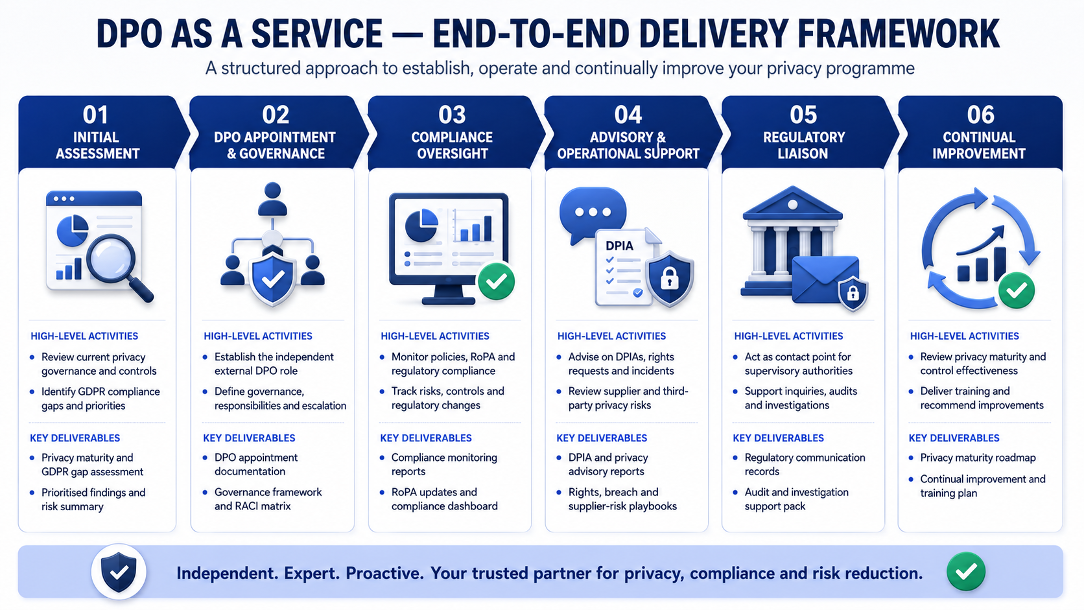
Depending on the agreed scope, Kelmac Group’s DPO as a Service may include:
Acting as the formally appointed Data Protection Officer
Advising management and employees on GDPR obligations
Monitoring compliance with data protection laws and internal policies
Reviewing privacy risks associated with projects, systems and suppliers
Advising on Data Protection Impact Assessments
Supporting personal data breach assessment and response
Monitoring data subject rights processes
Reviewing Records of Processing Activities
Supporting privacy notices, policies and procedures
Liaising with supervisory authorities
Acting as a contact point for individuals
Delivering privacy awareness and role-based training
Providing regular compliance reporting to senior management
An outsourced DPO can provide access to specialist expertise while maintaining the independence required for the role.
Articles 37–39 of the GDPR establish the conditions for appointing a DPO, the position the DPO must hold within the organisation and the minimum tasks associated with the role. An organisation must appoint a DPO where:
The processing is carried out by a public authority or public body, except courts acting in their judicial capacity
Its core activities involve regular and systematic monitoring of individuals on a large scale
Its core activities involve large-scale processing of special-category data
Its core activities involve large-scale processing of personal data relating to criminal convictions and offences
Organisations that appoint a DPO must publish the DPO’s contact details and communicate those details to the relevant supervisory authority. A DPO must be involved properly and in a timely manner in matters relating to personal data protection. The organisation must provide the DPO with sufficient access, resources and support to perform the role effectively.
The DPO must be able to:
Operate independently
Report directly to the highest management level
Perform the role without receiving instructions regarding the outcome of their advice
Avoid roles or responsibilities that create a conflict of interest
Access relevant information, systems, records and stakeholders
Maintain appropriate professional knowledge of data protection law and practice
The DPO advises and monitors, but responsibility for GDPR compliance remains with the controller or processor.
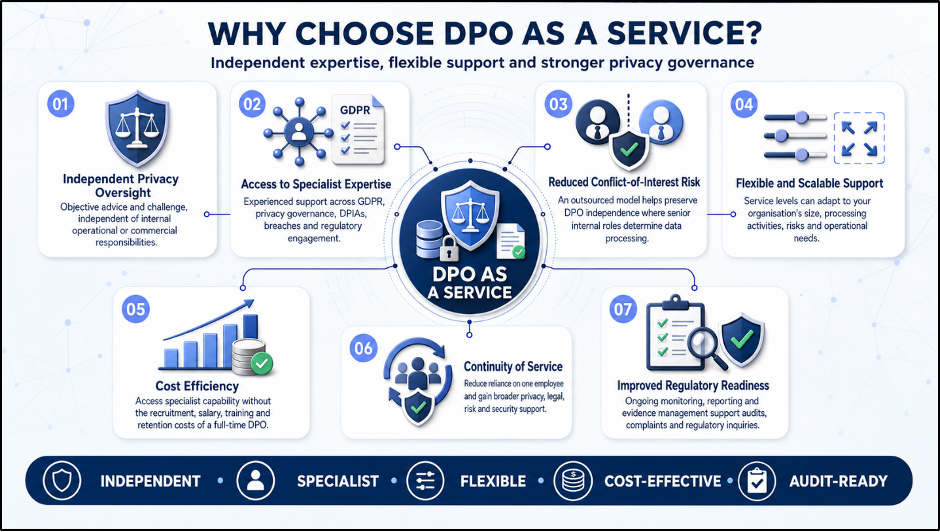
Appointing an outsourced DPO provides a practical alternative to recruiting and retaining a full-time internal specialist.
Our approach is structured, risk-based, and aligned with leading privacy and security frameworks.
A well-implemented DPO function delivers more than regulatory compliance; it strengthens organisational resilience and trust.
H3: Enhanced Compliance: Ensure alignment with GDPR and related EU data protection regulations.
H3: Risk Reduction: Identify and mitigate privacy risks before they result in incidents or fines.
H3: Improved Governance: Establish clear accountability and structured oversight of data processing activities.
H3: Customer Trust: Demonstrate commitment to protecting personal data, enhancing brand reputation.
H3: Operational Efficiency: Streamline processes related to data subject rights, breach management, and documentation.
H3: Regulatory Confidence: Be prepared for audits, investigations, and regulatory inquiries
Kelmac Group provides practical and independent DPO support tailored to the organisation’s risk profile, operating model and regulatory environment.
H3: Independent and Conflict-Free: The DPO service is structured to protect the independence of the role and ensure that privacy advice can be provided objectively
H3: Experienced Privacy Professionals: Our consultants combine knowledge of data protection law, privacy governance, information security, risk management and regulatory compliance.
H3: Risk-Based Delivery: We prioritise activities according to the nature of the personal data, processing scale, affected individuals and potential impact on their rights and freedoms.
H3: Practical Business Advice: Our recommendations are designed to support compliance while recognising commercial, operational and technical realities.
H3: Integration with Existing Frameworks: The DPO service can align with existing GDPR, ISO 27001, ISO 27701, cybersecurity, risk, audit and governance programmes.
H3: Clear Management Reporting: We provide structured reporting so senior management can understand privacy risks, priorities, dependencies and required decisions.
H3: Scalable Service Model: Support can be tailored from periodic advisory oversight to a comprehensive managed DPO function.
A DPO is mandatory where the organisation meets one of the conditions in Article 37 GDPR, including certain public-sector processing, large-scale regular and systematic monitoring, or large-scale processing of special-category or criminal-offence data. Where appointments are not legally mandatory, an organisation may still choose to appoint a DPO voluntarily. Once formally designated as a DPO under GDPR, the organisation should ensure that the role, independence and responsibilities are properly respected.
Yes. GDPR allows the DPO role to be fulfilled under a service contract by an individual or an external organisation, provided the required expertise, accessibility, independence and conflict-of-interest safeguards are maintained.
GDPR does not prescribe one specific qualification. The DPO should be appointed based on professional qualities, particularly expert knowledge of data protection law and practice, and the ability to perform the statutory tasks of the role. The appropriate level of expertise should reflect the sensitivity, scale and complexity of the organisation’s processing activities.
Kelmac Group provides a named or managed DPO resource that works with your internal stakeholders, reports to senior management and delivers the agreed advisory, monitoring, assurance and regulatory-contact activities. The arrangement is documented through defined responsibilities, communication channels, reporting arrangements and service priorities.
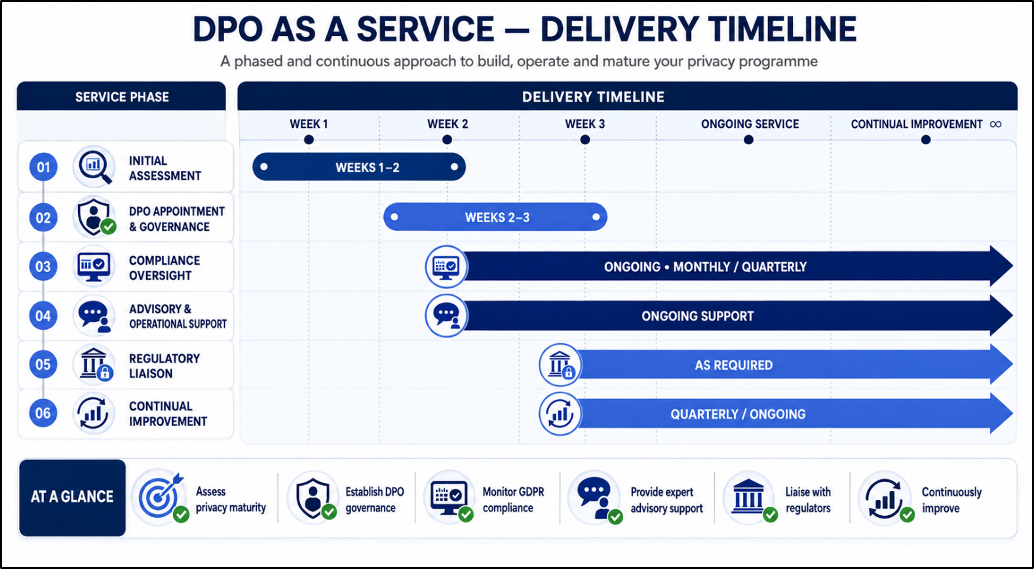
An outsourced DPO can generally be mobilised faster than recruiting a permanent internal resource. The exact timeline depends on organisational complexity, legal entities, processing activities, conflict checks and the availability of key information and stakeholders
Yes. The DPO should be involved promptly in personal data incidents and can advise on risk assessment, notification obligations, communication with affected individuals and engagement with the supervisory authority. Operational responsibility for investigating, containing and managing the incident remains with the organisation
Organisations that appoint a DPO pursuant to Article 37 GDPR must publish the DPO’s contact details and communicate them to the relevant supervisory authority. In Ireland, the DPC maintains a register of notified DPO contact details.